Guide
Pre-Columbian sites of the Northwest
Quilmes, the Pucará de Tilcara and the ruins along the Inca road — where to see the Andean civilisations that long preceded Spanish Argentina.
By Visit NOA Editors ·
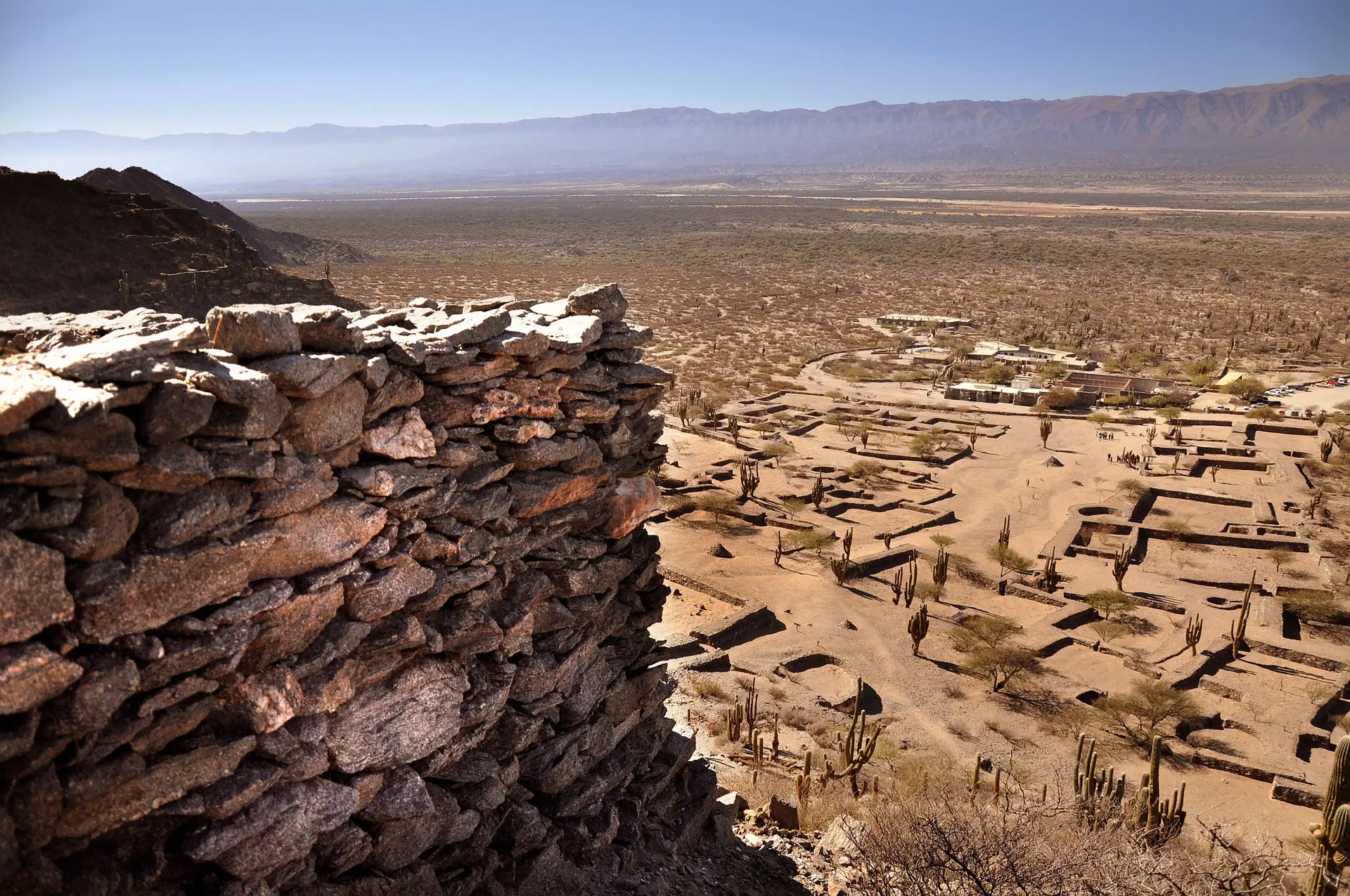
Photo: Ruarte, CC BY-SA 3.0
Experiences
Tours for this trip
 Free cancellationPrivate tourViator
Culture
Private Tour to Iruya Humahuaca and Tilcara
To discover the magic of colors of the Quebrada de Humahuaca, we start from Salta through RN 9/34 to reach San Salvador de Jujuy from where we will begin to walk the wonderful villages of the Quebrada de Humahuaca to…
Full day · 14 h · Salta, Humahuaca, Tilcara
From US$459
4.6 out of 5 (13)
 Free cancellationViator
Culture
Quebrada de Humahuaca From Salta with Purmamarca
Discover the beautiful landscapes offered by the Quebrada de Humahuaca, with its picturesque villages, culture and ancestral history. The various colors, mountains and hills. The native fauna, the warmth of its people,…
Full day · 12 h · Salta, Humahuaca, Purmamarca
From US$56
4.9 out of 5 (130)
 Likely to sell outViator
Nature
2-Day Calchaquí Valley Tour to Cachi and Cafayate
Experience the incredible Calchaquí Valley on this activity-filled overnight tour from Salta that combines stunning natural scenery with Argentine wine. You’ll enjoy a scenic round-trip drive to the towns of Cachi and…
Full day · 48 h · Salta, Cafayate, Cachi
From US$461
5.0 out of 5 (1)
The Northwest was the most densely settled part of what is now Argentina long before the Spanish arrived. Farming communities worked these valleys for well over a thousand years, the Inca empire absorbed them in the late fifteenth century, and the resistance to Spanish rule lasted until the 1660s — longer than almost anywhere else on the continent.
Quilmes, Tucumán
The largest pre-Columbian settlement in the country: terraces, walls and dwellings spread across a hillside below the Calchaquí ridge, once home to a few thousand people. The Quilmes held out against the Spanish for more than a century before the survivors were marched 1,200 km to Buenos Aires in 1667 — the forced exile the modern town of Quilmes is named after.
The site is now co-managed with the descendant community, and visiting with a local guide is what gives the stones their meaning. It lies off RN40 between Cafayate and Santa María.
Pucará de Tilcara, Jujuy
A fortified hilltop town above the Río Grande, built by the Omaguaca people and later held by the Inca. Parts of it were reconstructed in the twentieth century — contested archaeologically, but it makes the layout legible in a way that bare foundations do not. The view over the Quebrada de Humahuaca is worth the climb alone, and the botanical garden of high-altitude cacti sits at the entrance.
The Inca road
The Qhapaq Ñan, the Inca road system, ran through these valleys and is a UNESCO World Heritage site across six countries. Its Argentine stretches include Santa Rosa de Tastil, a large pre-Inca town on the road to San Antonio de los Cobres, and a chain of tambos — way stations — threaded along the Puna.
Menhires of Tafí del Valle
Around 130 carved standing stones, some over three metres tall, left by the Tafí culture from roughly the third century BCE. They were gathered from the surrounding valley into a reserve near the town, which saves them but removes their original context.
Visiting respectfully
- Several sites are on indigenous community land; hire community guides where they are offered.
- Stay on the marked paths — terrace walls are dry stone and collapse under foot traffic.
- Take nothing from the ground, including pottery fragments.
- Most sites are above 2,000 m and have little shade: go early, with water and a hat.
Where to base yourself
Tilcara is the best base for the Jujuy sites and has the regional archaeology museum. Cafayate or Santa María work for Quilmes, and Salta reaches Santa Rosa de Tastil on the road west towards the Puna.


